

RCCD PACT Program Highlights Strong First Year Outcomes and Expanding Student Pathways
09/17/2026
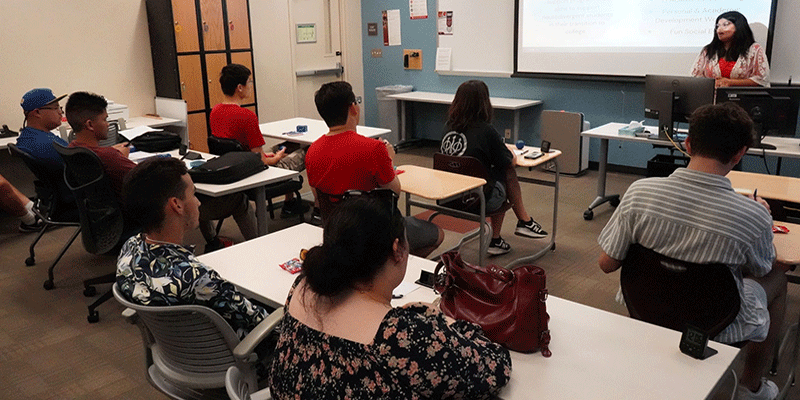
Riverside Community College District (RCCD) is expanding opportunities for students who have historically faced barriers to higher education and workforce entry, with programs designed to help students successfully transition to college, complete coursework and prepare for careers.
Among the District’s promising initiatives is the Promoting Achievable College Transitions (PACT) program, which is demonstrating strong first year outcomes for autistic and neurodivergent students transitioning from high school to college.
PACT is offered across the District at all three colleges: Riverside City College, Moreno Valley College and Norco College. The program begins working with students during their senior year of high school and continues through their first year of college. Students receive high touch case management, support from dedicated Student Success Coordinators, academic assistance, social support and individualized guidance to help them navigate the transition to higher education.
The program’s inaugural cohort is already showing what is possible when students receive structured support throughout this critical transition.
Of the 181 students in PACT’s inaugural college cohort, 151 successfully completed a college level English and or mathematics course during their first year. Completing a college level English or mathematics course represents an important academic milestone as students progress toward certificates, degrees and transfer goals.
Collectively, PACT students completed 2,748 college credits during their first year, with 33 students completing 30 or more units. On average, PACT students completed 15.8 credits each during the year, representing meaningful progress toward their educational goals.
PACT students also demonstrated strong academic performance throughout their first year. Their course success rate exceeded the overall RCCD student population by nine percentage points in Fall 2025 and eight percentage points in Spring 2026. Student retention remained essentially equal to the Districtwide rate.
“These outcomes demonstrate the difference that intentional, individualized support can make,” said Michael Peterson, Executive Director of Adult Education & Community Initiatives at Riverside Community College District. “PACT was created around a simple but important idea: students should not have to navigate the transition from high school to college alone. Our students are not only entering college. They are completing gateway courses, earning meaningful college credit and continuing on pathways toward their educational and career goals. We are proud of what our students have accomplished and excited about the opportunity to build on this success for the next cohort.”
Peterson also added, "this program adds value to both students in terms of their career development and the community at large, which is better served with a larger multilingual healthcare workforce to better serve our multilingual community."
The results are particularly significant for a student population that has historically encountered substantial barriers to postsecondary education. PACT was designed to address those barriers by establishing a continuum of support that begins before students enter college and continues through their first year.
During the most recent quarter, PACT worked with 300 high school students across the region through its college transition efforts, creating a growing pipeline of neurodivergent students preparing to enter RCCD colleges.
The program is now welcoming its second college cohort and applying lessons learned from its inaugural year to expand and strengthen student support. As Cohort 2 enters college, the PACT team will continue helping students successfully transition to college, complete critical gateway coursework, accumulate meaningful college credit and remain on a pathway toward a college degree.
The program is supported through grant funding that is scheduled to conclude September 30. The first-year results demonstrate the potential impact of sustained investment in comprehensive transition services for neurodivergent students and the growing demand for these services throughout the region.
Published by External Relations & Strategic Communications